Diabetes is becoming a major epidemic in Australia, placing significant strain on our health care system (Diabetes Australia, 2018).
Diabetes plays an important role in the health of your feet, and if left uncontrolled can cause a number of issues. It typically affects your feet in two major ways — both connected to blood flow and nerve function.
Nerve damage that can reduce feeling and protective sensation in your feet, making it harder to notice cuts, blisters or pressure areas before they become a problem.
Reduced blood flow to your feet, which can slow healing and increase the risk of infection and other complications.
We know a diabetes foot check can feel like just another appointment on a long list — so we take the time to explain what we're looking for and why, in plain language.
Every assessment is pain-free and non-invasive, and you'll leave with a clear picture of where you stand rather than a stack of unanswered questions.
Anyone diagnosed with diabetes should have a diabetes foot check at least every 12 months. It's a preventative measure — designed to empower you with the education and advice you need to know how best to protect your feet.
If you have a history of foot ulcers or amputations, more frequent diabetes foot assessments are extremely important.
One of our skilled podiatrists will take a thorough history to identify any factors that increase your risk of developing foot problems. All of our testing is pain-free and non-invasive.
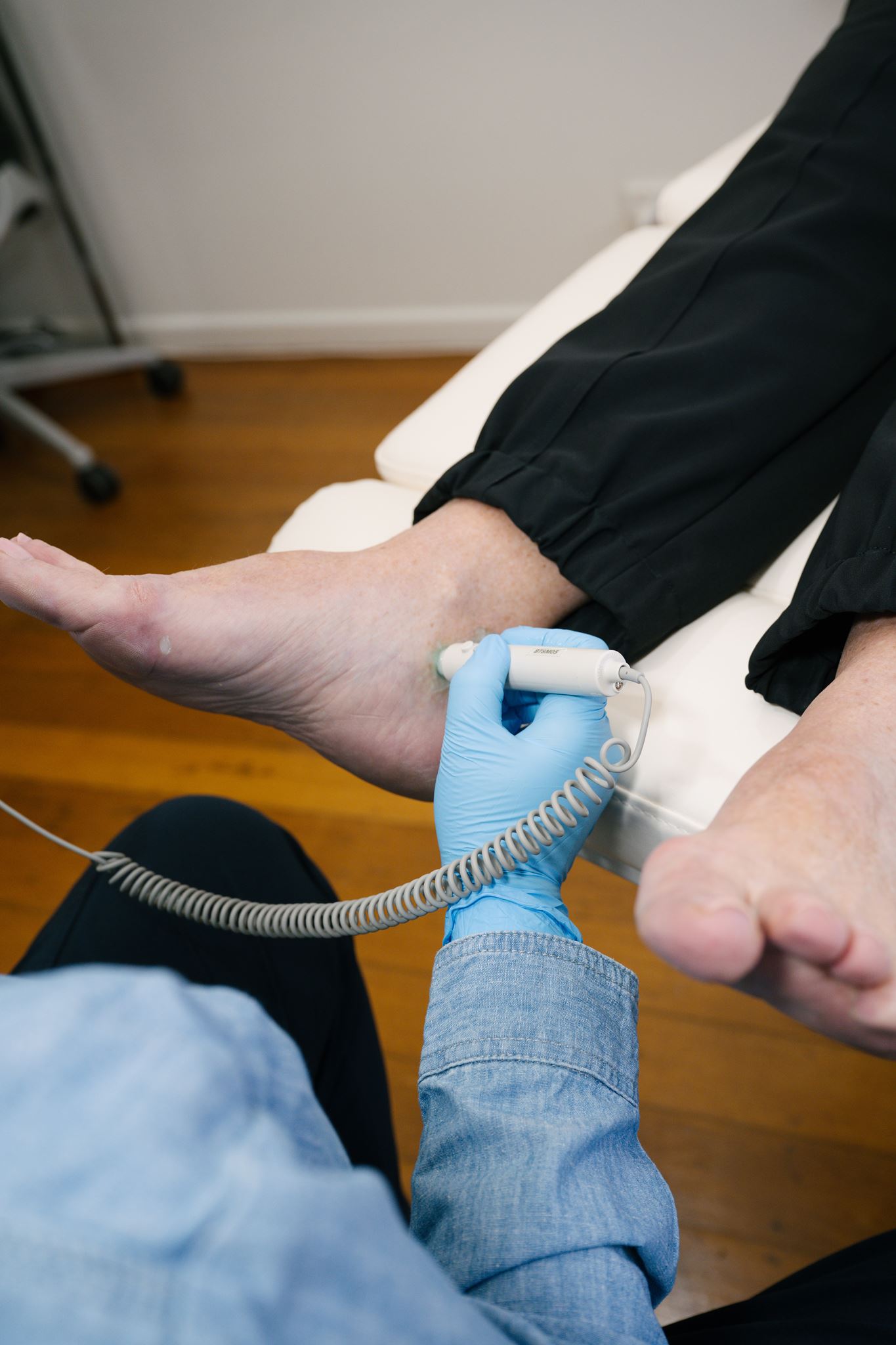
Checking blood flow to your feet through accurate palpation of your pedal pulses and a doppler (mini ultrasound) assessment.
Checking the function of your nerves — assessing feeling and protective sensation using a vibrational tuning fork and a monofilament.
A thorough check of your nails and skin, identifying common conditions including callus, corns or dermatitis.
Identifying structural risk factors such as bunions, hammer toes or claw toes that could contribute to complications.
Assessing your shoes and socks against clear, diabetes-specific guidelines — a step that's often overlooked.
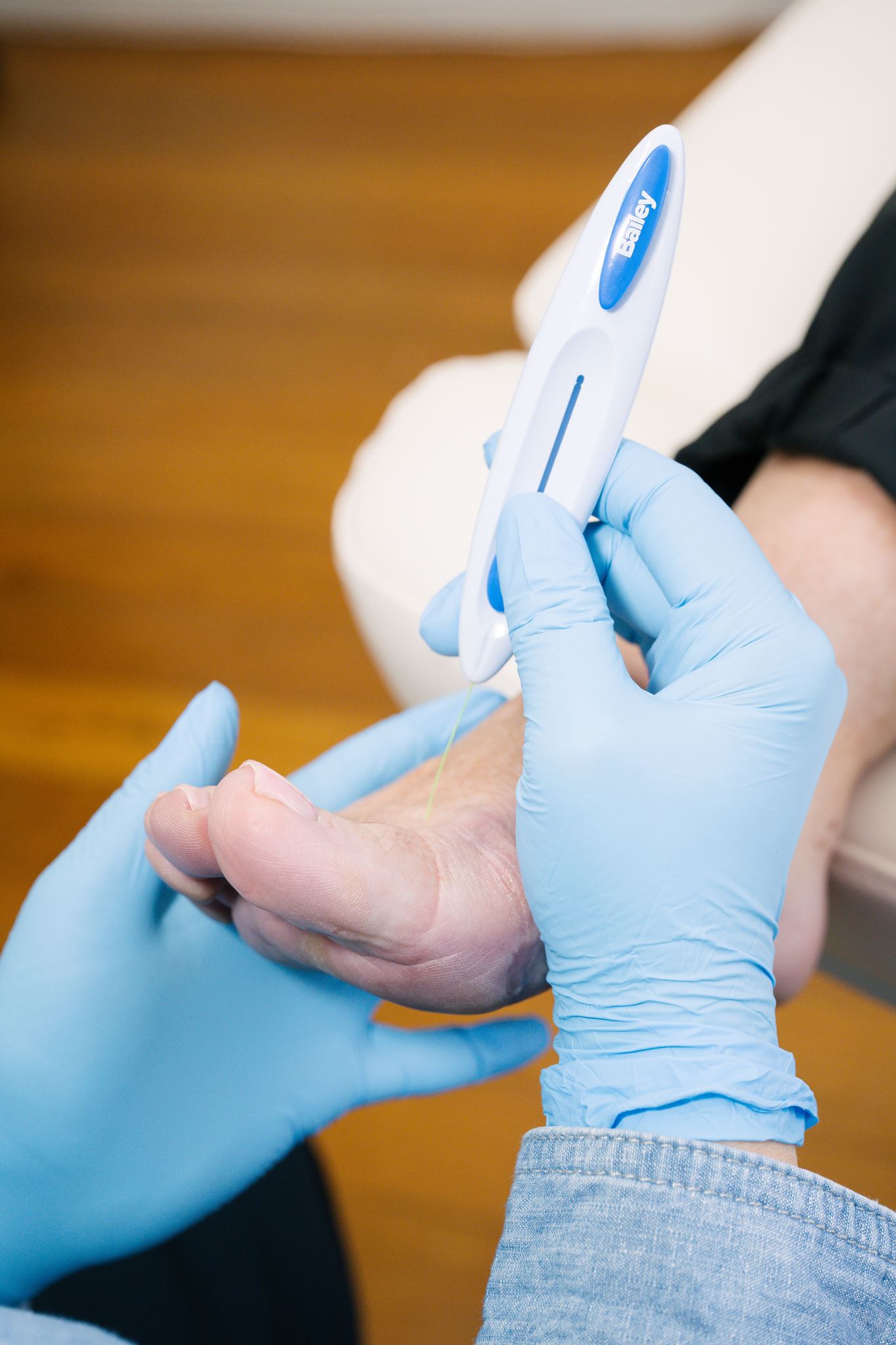

Booking a Diabetes Foot Assessment and Education session allows us to determine your level of risk of developing foot complications. Your podiatrist will provide you with the education you need to stay on track between visits.
When you choose Undefeeted Podiatry for your diabetic foot care, you'll also receive a comprehensive report of your results, along with suggestions and advice to take home with you.
Stay ahead of foot complications with a thorough, pain-free assessment from our team.
Our Pricing